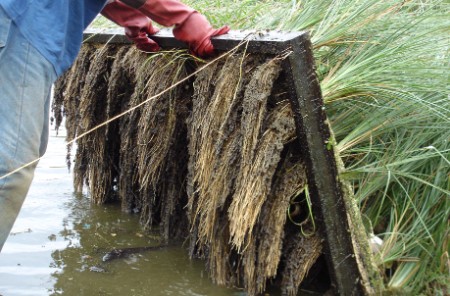
Vetiver’s phytoremedial mechanism, and how it might mitigate water pollution in tropical countries with India as an example
Vetiver Phytoremediation – The Mechanisms Vetiver grass (Chrysopogon zizanioides) removes agricultural and waste water (sewage) pollutants through four integrated biological mechanisms operating simultaneously. (1) The foundation is its massive vertical root system reaching 3-4 meters depth, creating enormous surface area…
NEWSLETTER (NL2026-04) The 9-Degree Solution: What Vietnamese Farmers Discovered (And Science Had Already Proven}
Welcome to an extraordinary month in the Vetiver world. From Vietnamese farmers making remarkable discoveries to Brazilian associations taking flight, from Ethiopian insights finally being understood to engineering breakthroughs that challenge conventional thinking—this month reveals vetiver’s true power not just…
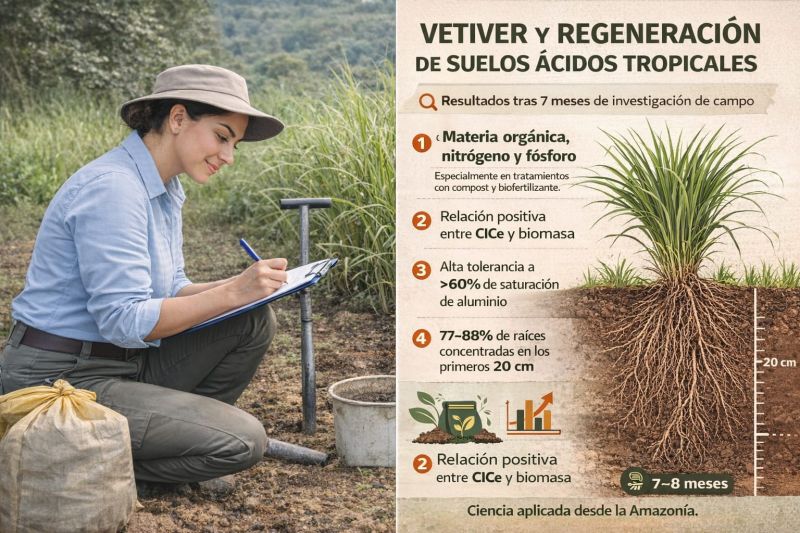
HOW VETIVER ACTUALLY IMPROVES SOIL FERTILITY
Think of degraded soil at 1.5% organic matter barely supporting crops. Now imagine bringing it to 4.3%. That’s what Anno Farms in Ethiopia achieved over 15 years with vetiver. Not guesswork—measured data from a 200-hectare commercial operation. Here’s how: THE…
Newsletter (NL2026-02) — A belated February newsletter & Global Water Bankruptcy, Patricia Tello Reátegui, Potential Funding Opportunities for VS Practitioners, VS Academic Visibility, Slope steepness & rooting, and others….
Our February Newsletter is coming out quite late for technical reasons: we have just migrated the TVNI website from its long time host, CSS Communications (of Bellingham, Washington) to a new host and so were “down” during the transfer. As…
Vetiver as Vetiver Forage: What the Evidence Really Shows, a Drought Resilient Feed
Across the tropics, livestock producers face a recurring challenge: how to maintain animals through long dry seasons, drought cycles, and periods when conventional fodder collapses. Vetiver grass, long celebrated for its engineering and environmental benefits, is increasingly recognized as a…
Vetiver Grass Technology, Nematodes, and Crop Health: A New Biological Paradigm for Tropical Agriculture
For decades, root‑knot nematodes (Meloidogyne spp.) have quietly undermined tropical agriculture, reducing yields in bananas, chilli peppers, tomatoes, cassava, sweet potato, and dozens of other crops. Their damage is often misdiagnosed as drought stress or nutrient deficiency, leaving farmers with…
Vetiver Grass – The Microbial Engine that drives the Vetiver Grass Technology – Transforming Vetiver Plant Establishment, Perennial Cropping Systems, and Soil Restoration
The Microbial Engine Behind Vetiver’s Exceptional Performance . Across the tropics, vetiver grass has earned its reputation as one of the world’s most resilient biological tools for soil and water conservation. Its deep, fibrous roots anchor slopes, its dense hedges…
Newsletter – Vetiver Secrets, Soil Health, Wastewater, Forage (NL 2025-01)
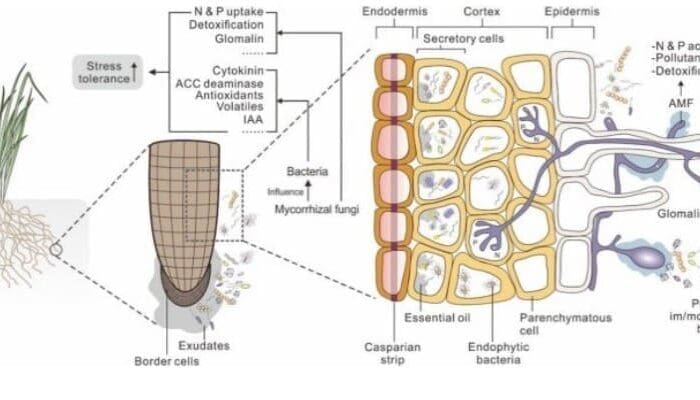
The Secrets of Vetiver. As research is carried out on various attributes and applications of vetiver we are coming to learn how the plant functions and what it can do. A recent Chinese study “Reshaping the microenvironment and bacterial community…
The Broken Hydrological (Water) Cycle — and Feedback from Vetiver users (NL 2024-08)
The Broken Hydrological (Water) Cycle. Summer is always a rather slow time for exchanging vetiver information – a time to relax and reflect. I have been re-reading Charles Massy’s book “Call of the Reed Warbler” (available from e.Books.com). It makes…