The Vetiver Network International (TVNI)
Vetiver Grass Technology
What it is, how to grow it, and how to design with it
If you have a land or water problem, there is a good chance Vetiver Grass Technology can fix it.
The low-cost Vetiver Grass Technology (VGT) uses the deep-rooted, non-invasive vetiver grass (Chrysopogon zizanioides) to control soil erosion, stabilize slopes and rehabilitate degraded land. Developed and promoted globally since the 1980s, VGT mainly involves planting vetiver in dense, narrow hedgerows along the contour. Its vertical roots, reaching 3–5 meters within two to three years, and its dense, stiff, filtering hedge above ground anchor the soil, slow runoff and trap sediment. It thrives in harsh conditions including drought, flood and poor soils, making it ideal for agriculture, infrastructure protection, phytoremediation of contaminated soil and water, disaster mitigation and environmental restoration. Beyond this core group of applications, vetiver also offers economic products and benefits through essential oils, handicrafts, pest control, forage, mulch and high rates of carbon sequestration, among others.
Water is the master function
Strip Vetiver Grass Technology back to its core and it is a way to manage rainfall: where the rain goes, and how it moves across and into the land.
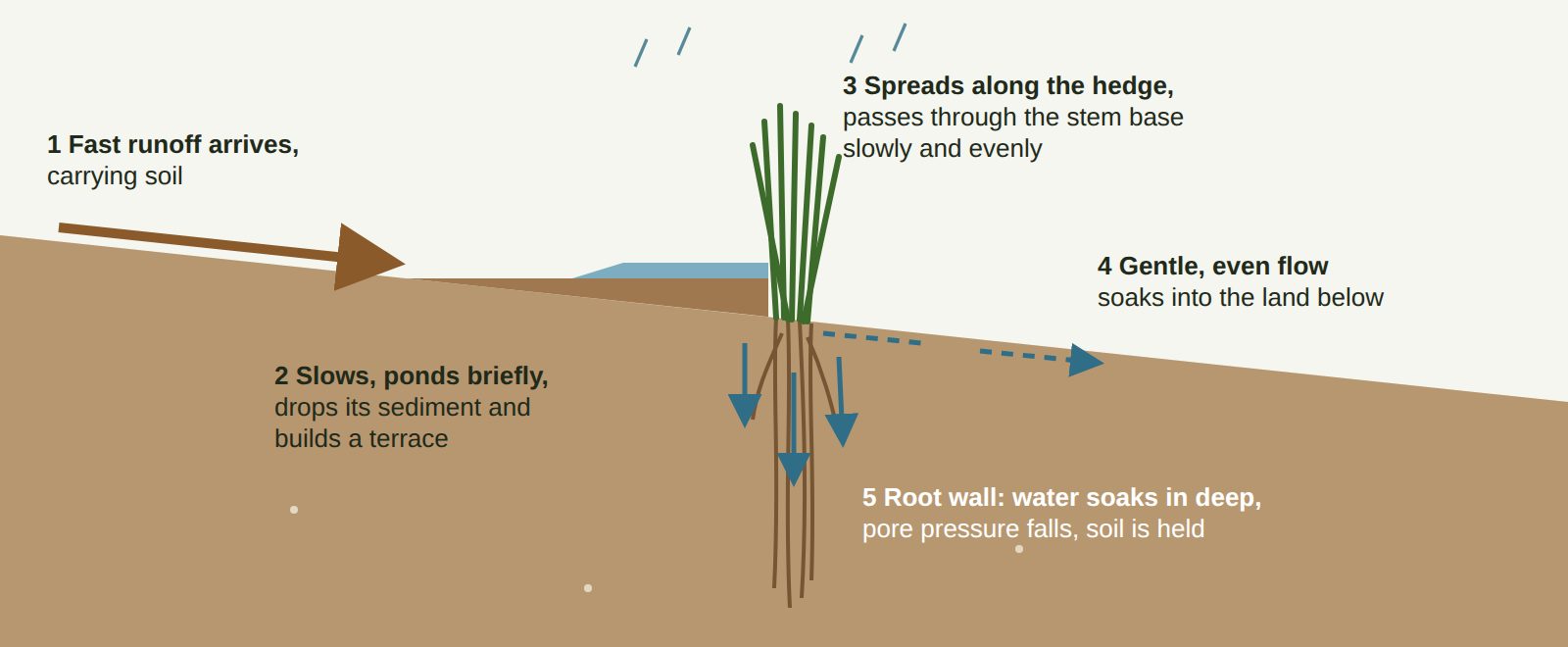
A dense vetiver hedge works as a porous weir. It does not dam water; it meters it. Runoff arriving at the hedge is slowed, ponded briefly, spread along the hedge and passed through the stem base at low velocity, dropping its sediment on the upslope side. Below ground, the deep root wall draws that water down into the soil. Get the water right and water-driven erosion is largely solved as a by-product, because erosion is the symptom and moving water is the cause. This is why one plant serves erosion control, groundwater recharge, slope stabilization and pollution control: in every case it is managing water, and the application only changes what we want the water to do.
The pages below give an overview of Vetiver Grass Technology, followed by the basics. Anyone using vetiver for the first time should read them in this order.
Understand
What VGT is, how a hedge works, and the plant behind it.
What is Vetiver Grass Technology?
Overview, the critical elements of a stiff grass hedge, applications in brief, and why VGT is climate smart.
The Plant
Botany, the two species, sterility and safety, roots and shoots, and black vetiver.
Grow and plant
Produce planting material, plant it correctly, and look after the hedge.
How to Plant and Maintain
Spacing, planting, fertilizer, watering, hedge intervals and aftercare.
Plant Suppliers
Nurseries around the world that supply sterile vetiver planting material.
Design
Engineering-grade guidance for projects of every size.
Guides, Standards, Specifications and Special Focus Notes
Generic design standards and guides for water, slopes, wastewater and livelihoods, with contract specifications.