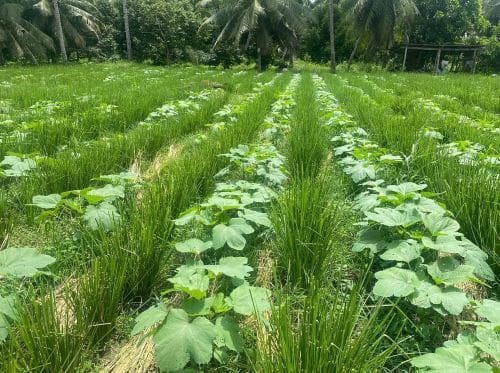
What is Vetiver Grass Technology?
Overview, how the hedge works, and why it is climate smart
- Overview
- Water management
- Plant characteristics
- How a hedge works
- Applications in brief
- Climate smart
- Implementation essentials
Vetiver Grass Technology (VGT) is a high-performance nature-based solution built around the unique bio-engineering properties of Chrysopogon zizanioides, whose deep, vertical root system and dense hedgerow structure deliver exceptional erosion control, slope stabilization, water filtration and phytoremediation across a wide range of landscapes. Because it is sterile, non-invasive, climate-resilient and effective under extreme conditions where many nature-based options fail, VGT consistently ranks among the most reliable and engineering-grade nature-based technologies, often scoring at the top for cost-effectiveness, durability and measurable performance in both land and water applications. Its ability to integrate with other nature-based approaches, from agroforestry to wetland restoration, makes vetiver a backbone technology for climate resilience, watershed protection and regenerative agriculture programs worldwide.
Water first: the hedge as a porous weir
In recent years it has become clear that vetiver’s most important function, especially when grown as a hedge, is water management: how rainfall is conserved and distributed across the land. It affects every application in one way or another.
Vetiver manages water in two ways. Hydrology is where the rain goes: how much soaks in, how deep it recharges, how much runs off, and when. Hydraulics is how moving water behaves when it meets the hedge. Get these two right and water-driven erosion is largely solved as a consequence. A hedge that governs where water goes and how it moves does not need to fight erosion directly; it removes the energy and the pathways that create it.
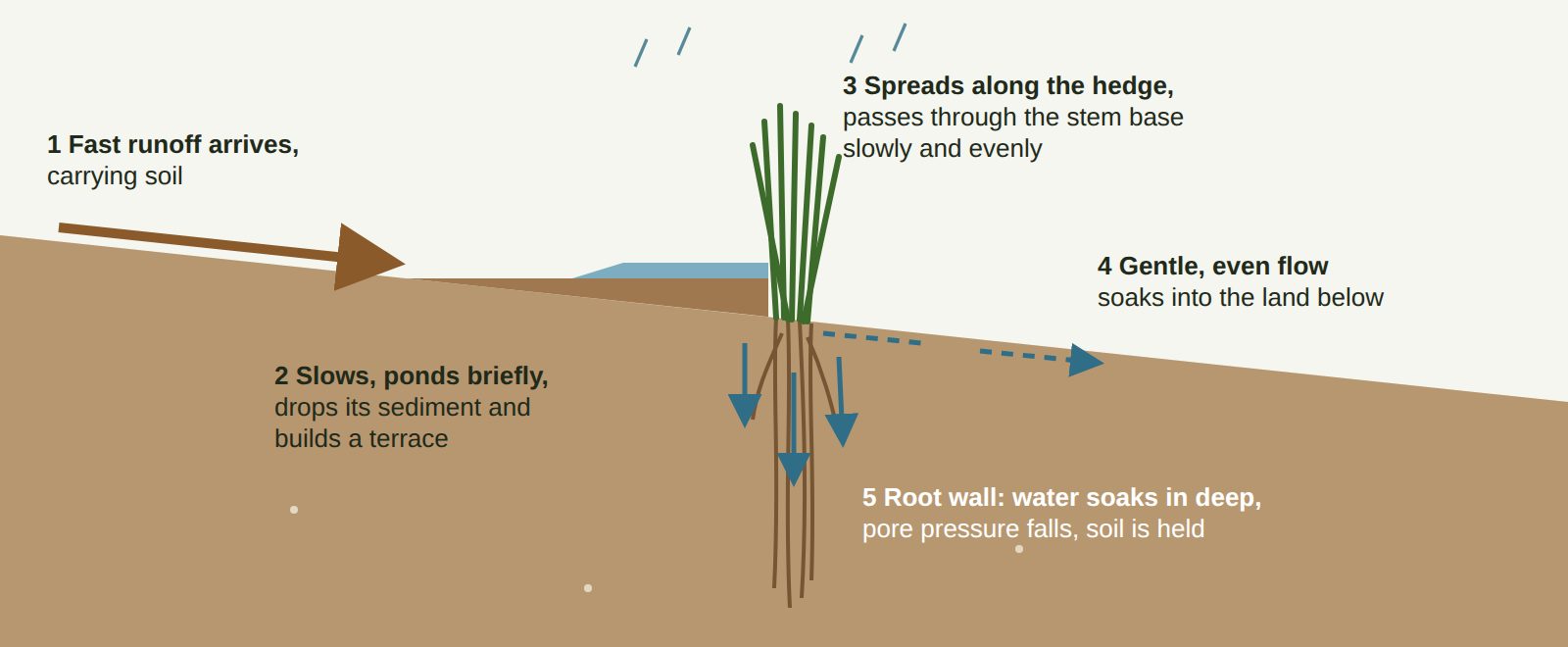
How the porous weir works
Where the water is made to go
The same mechanism is designed for opposite ends depending on the problem. The question is not how much water enters the soil, but where it is made to go once it is there, and how long it stays.
| Application | Water-management intent |
|---|---|
| Farms and watersheds | Get rain into the profile and hold it there; slow and spread flow; recharge groundwater and dry-season flow |
| River banks and channels | Slow flow and dissipate its energy; protect the margin |
| Slopes and earthworks | Lower pore pressure in the failure zone by draining and transpiring water faster than it arrives; reinforce the soil |
| Wastewater and effluent | Maximize evapotranspiration and the time water spends among the roots, for nutrient and contaminant uptake |
| Livelihoods and agriculture | Raise soil moisture and recharge; sustain soil biology |
| Waterlogged farmland | Shorten residence and lower a shallow perched water table so crops other than rice can root |
What has been measured
The hidden benefits that ride on water
The payoff that matters most to a farmer is not an annual water balance but whether moisture stored in the soil carries the crop through a two-week break in the rains. That moisture also sustains the mycorrhizal fungi and wider root-zone biology that drive nutrient uptake and drought resilience in vetiver and the crops beside it. These benefits are hidden: runoff and soil-loss measurements do not capture them, satellites cannot see them, and they often appear only after a project has been evaluated. On gentle farmland, where visible erosion is modest, this water-and-biology package is where much of vetiver’s value lies.
Core plant characteristics
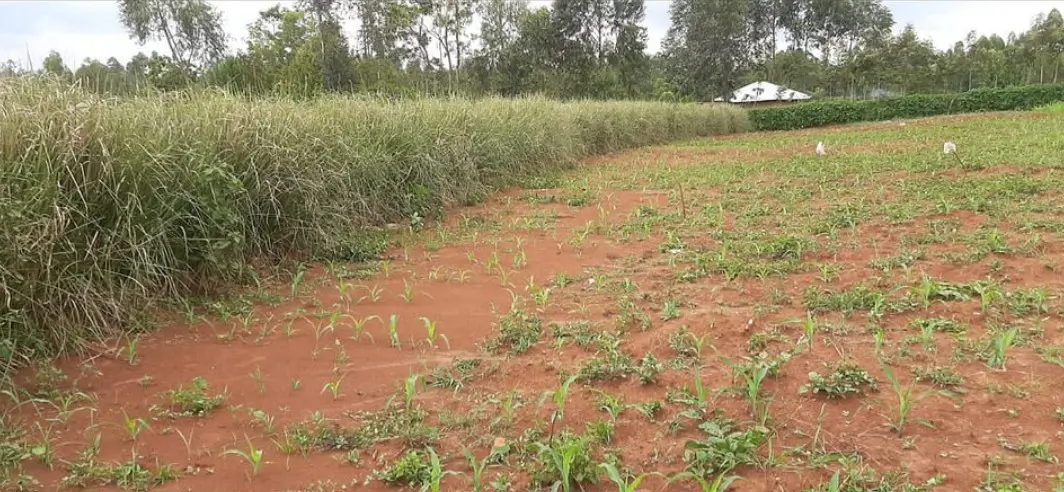

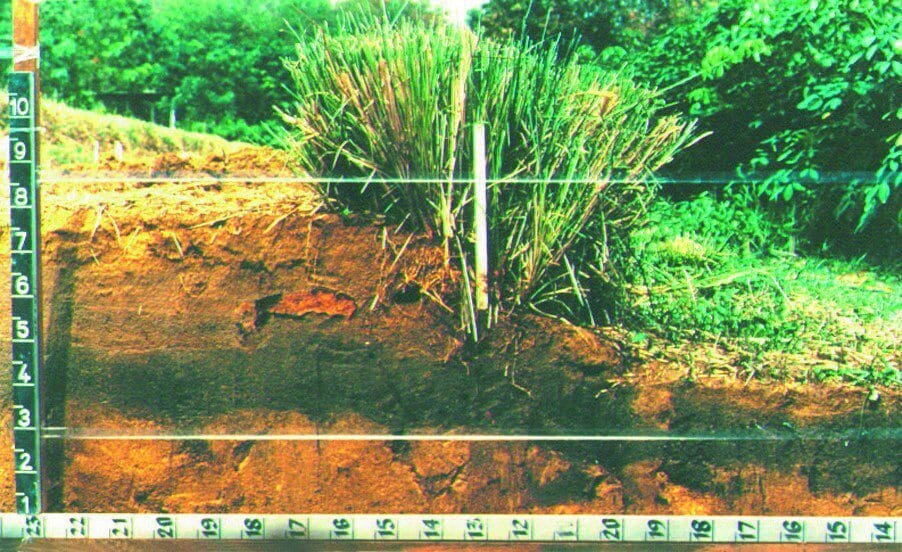
The research behind the porous weir: narrow stiff grass hedges for soil and water conservation
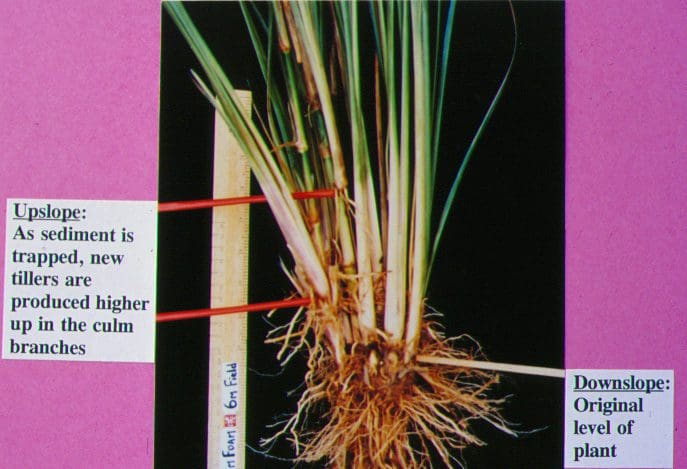
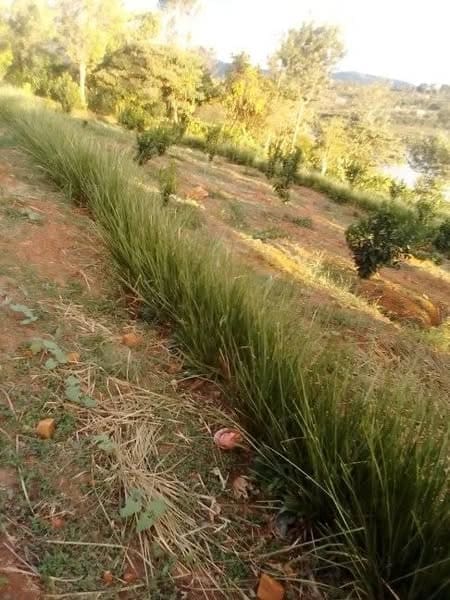
“Narrow stiff grass barriers (hedgerows) when placed across the slope of the land, if applied correctly, create the means of reducing sheet, rill and ephemeral gully erosion by trapping sediment and spreading the concentrated flow of high velocity rainfall runoff (Dabney 1996). Stiff Grass Hedges (SGH) such as vetiver can do this because they can withstand high water flows (40 cm deep) and velocities (as much as 0.04 m3 s-1 m-1) and can continue to perform with the buildup of sediment behind the hedge, whereas shorter and softer vegetation will fail and become inundated. Over time the sediment buildup behind the hedgerows changes the slope of the upslope land further reducing flow velocity and increasing the spreading and back ponding effect. Meyer (1995), using a flume study of Vetiver and Switch grass (Panicum virgatum), concluded that SGH have great potential for retarding concentrated overland flows and runoff, and trapping sediment.”
“Kervroëdan (2018) investigated composition of narrow vegetative barriers (hedges) for sediment control in France concluded that SGH efficiency depended on hydraulic roughness reflected by stem and tiller density, stem stiffness, and leaf density. Vetiver was not part of the evaluation, but has all the positive traits that makes a good SGH, having dense tillers and stems that work with low flows, and leaves and stem that are stiff and dense that provide the necessary hydraulic roughness at high flows…”
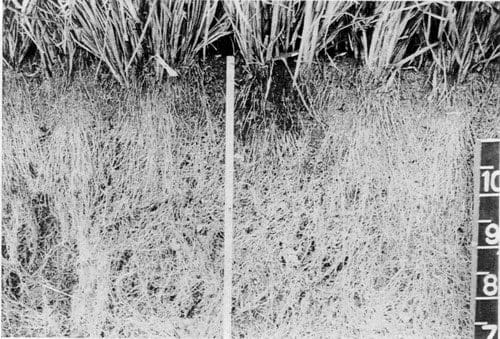
“The other important primary function of the SGH is to increase the infiltration rate of rainwater. Studies indicate that there is a significant increase in infiltration due to large, dense and deep roots, and large soil pores with respect to SGH grasses, Dabney (1996). This increased infiltration results in reduced runoff. A study by Rachman (2004) indicated that hydraulic conductivity within the hedgerow (130 mm h-1) was 7 times more than in comparative row crops maize (18 mm h-1), and 24 times more than in the fully saturated adjacent sediment deposition area (5.4 mm h-1) immediately upslope of the hedge.”
In effect a vetiver hedge acts as a very safe vertical drain, directing part of the flow to groundwater recharge and spreading the balance evenly along and through the hedge to downslope land and plants. This underscores the need for fully formed, dense hedgerows, an essential component of a quality vetiver application. For the full physical and biological basis, see Vetiver Hedge Mechanisms.
Key research findings
- Contour vetiver hedges reduced peak runoff by about 64% (ICRISAT), and runoff by 19–56% in paired plots in northern Thailand. Erosion reduction of about 85% has been measured at rainfall intensities near 105 mm per hour.
- Studies from Ethiopia, Nigeria, India and other regions show increased soil organic carbon and available phosphorus; enhanced moisture retention and nutrient availability; and improved yields for crops such as maize, cassava and cowpea.
- Effectiveness depends on hedgerow spacing, integration with other practices, and local adoption.
Applications in brief
Each application has its own pages under Applications. The summaries below give the essentials; open “More detail” for the technical points.
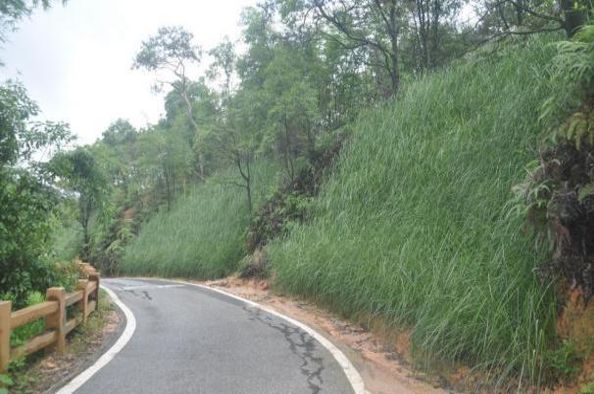
Slope stabilization
Water intent: drain and transpire faster than water arrives, lowering pore pressure
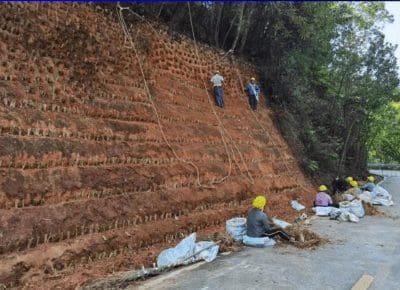
Field trials and modeling confirm vetiver as an effective bio-engineering solution for extreme slopes, up to 72° and in highly erodible soils. Its combination of mechanical strength, resilience and field performance makes it ideal for infrastructure slopes.
Photo 8. Vetiver hedges on a 140% slope in Guangdong, China, six months after planting. (p.c. Feng Ziyuan)
More detail
Structural features
- Narrow, stiff hedgerows planted across slopes form living barriers.
- Deep vertical roots, 3–5 m by years two to three, anchor soil and reinforce slope stability.
- Slipping-zone protection: roots stabilize the critical 2–3 m depth where soil failure often occurs.
- Shear resistance: roots resist lateral soil movement under load; tensile strength 40–120 MPa (average about 75 MPa).
Environmental advantages
- Thrives in poor, acidic, saline or agrochemically degraded soils.
- Needs little maintenance, regrows quickly after fire, and survives drought.
Polluted land and water
Water intent: maximize evapotranspiration and time among the roots
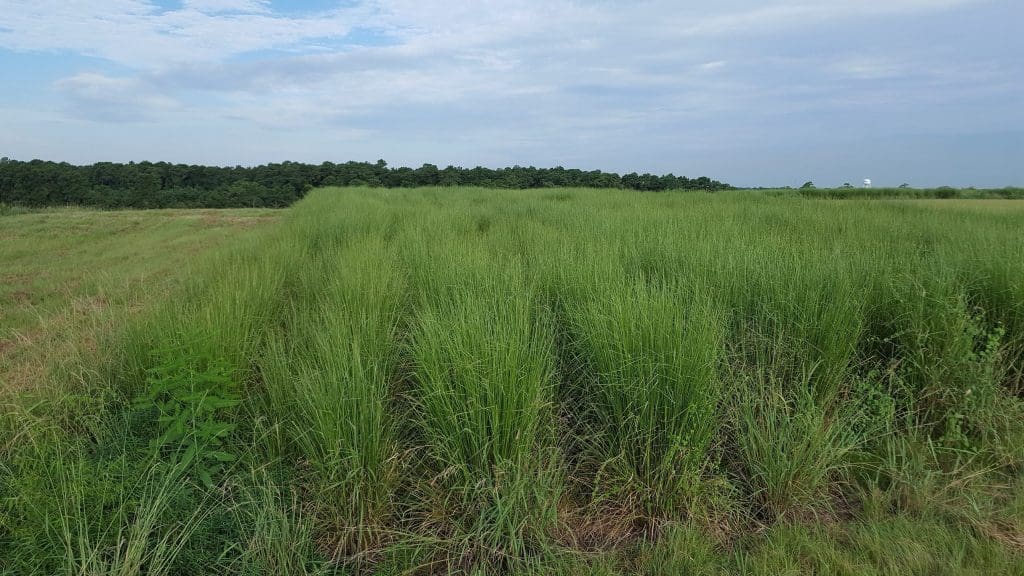
Vetiver absorbs heavy metals, helps break down organic pollutants, and thrives under wastewater irrigation, making it a proven tool for treating effluent, leachate and contaminated soil.
Photo 9. The Woodland Hills landfill project has processed more than 5.4 million gallons of leachate since 2014, cutting the facility’s carbon footprint, saving money and creating wildlife habitat. (p.c. Leachate Management Specialists Inc.)
More detail
Heavy metal remediation
- Phyto-extraction: absorbs metals such as Pb, Cd, Cr, Zn, Cu, As and Hg and translocates them to shoots.
- Phyto-stabilization: the dense root mat binds soil, reduces erosion, and immobilizes contaminants by altering pH and redox conditions.
- Bio-concentration and translocation: high BCF and TF values for Zn, Fe, Cu, Cd and Pb; uptake concentrated in roots.
- Root tolerance: withstands elevated metal concentrations, especially Fe, Pb and Zn.
Organic pollutant breakdown
- Rhizo-degradation: stimulates microbial activity to degrade pesticides and hydrocarbons.
- Absorption and biodegradation: effective against TNT, phenol, benzo[a]pyrene, atrazine, diuron and tetracycline.
- Root exudates release oxygen and organic carbon that enhance microbial breakdown.
Environmental adaptability
- Thrives in saline, acidic, alkaline and agrochemically contaminated soils.
- Performs well under wastewater irrigation, boosting biomass and pollutant uptake.
- Mycorrhizal fungi (e.g., Glomus mosseae) further enhance metal absorption and growth.
Agriculture
Water intent: get rain into the soil and hold it there
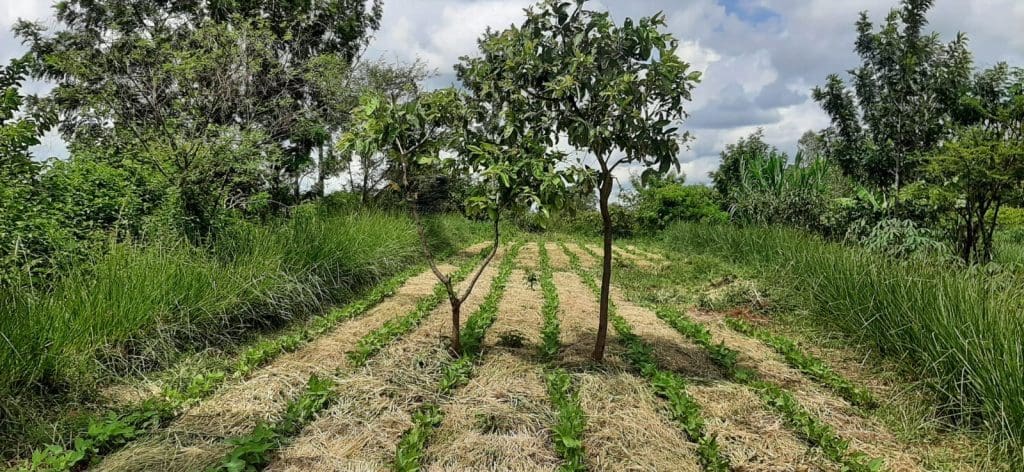
Vetiver controls erosion, conserves water, improves soil fertility and sequesters carbon, giving low-cost, long-term benefits to farmers in tropical and semi-arid regions. It is more than a soil protector: it is a regenerative system that boosts productivity, resilience and ecological health.
Photo 10. Vetiver hedgerows on a hot, dry farm in Kenya, with vetiver mulch between lines of beans to keep soil moist and cool and improve fertility.
More detail
Erosion control and water conservation
- Hedgerows cut runoff by 19–56% in paired plots in Thailand and peak runoff by about 64% at ICRISAT; erosion reduction of about 85% has been measured in intense rain.
- Roots and dense, stiff stems spread concentrated runoff along the hedge, giving more even soil moisture below it.
- Using hedge leaves as mulch on adjacent land adds further soil, water and crop benefits.
Soil fertility and health
- Improves soil organic matter, cation exchange capacity, and availability of nitrogen, phosphorus and potassium through its interaction with soil micro-organisms.
- Farmers report poor soils turned productive, with higher yields and better drought resilience.
- Removes toxic chemicals, including arsenic, benefiting soil and food quality.
- Supports mycorrhizal fungi that improve nutrient uptake and soil resilience.
Carbon sequestration
- One of the most effective plants for carbon capture, rivaling some fast-growing trees.
- Stores carbon in deep root biomass, building soil organic carbon.
- Helps mitigate climate change while improving soil fertility.
Environmental tolerance
- Thrives in acidic, saline, sodic and chemically degraded soils, ideal for land rehabilitation.
- Can restore soil health in contaminated zones and reduce agrochemical runoff.
Additional agricultural applications
- Enhances groundwater recharge and reduces siltation in drainage systems.
- Supports year-round cultivation and fits agroforestry and livestock systems.
- When correctly managed, provides quality livestock forage.
- Vetiver oil has pharmaceutical and cosmetic uses, adding economic value beyond farming.
Benefits at a glance
- Agriculture: prevents soil erosion, improves moisture retention and raises crop productivity on small farms.
- Infrastructure protection: stabilizes embankments, roads and railways, at a fraction of the maintenance cost of engineered systems.
- Environmental restoration: gully reclamation, slope stabilization and rehabilitation of degraded land.
- Water quality: filters sediment and pollutants from runoff, improving downstream water quality.
Why Vetiver Grass Technology is climate smart
Vetiver Grass Technology is not just a plant; it is a strategic toolkit for climate-smart development.
VGT harnesses the resilience and engineering strength of Chrysopogon zizanioides to protect soils, regulate water, and buffer farms and infrastructure against increasingly erratic climate extremes, while empowering communities through low-cost, locally managed implementation. Its deep, vertical roots stabilize land during intense rainfall, its hedgerows slow runoff and enhance groundwater recharge during drought, and its tolerance of heat, flooding, salinity and prolonged dry periods ensures dependable performance where many other nature-based solutions fail. Because VGT can be propagated, installed and maintained by local groups, without machinery, external inputs or specialized contractors, it strengthens community ownership, creates livelihood opportunities and builds long-term resilience from the ground up.
Water management is the climate link. The same hedge that holds rain in the soil through a dry spell also flattens flood peaks in intense storms, so one structure buffers both ends of an increasingly erratic climate. See Water first above.
Adaptation to climate change
- Autonomous adaptation: farmers and communities can implement VGT independently at minimal cost, using local labor and materials.
- Planned adaptation: governments and NGOs can scale VGT for infrastructure protection, land rehabilitation and disaster risk reduction.
- VGT helps communities cope with droughts, floods and land degradation, making them more resilient to climate variability.
Mitigation of climate impacts
- Vetiver’s deep root system sequesters carbon effectively, contributing to climate mitigation goals.
- It reduces runoff velocity, traps sediment and increases water infiltration, helping restore degraded landscapes and reduce greenhouse gas emissions from erosion-prone soils.
Infrastructure and community benefits
- Hedgerows protect roads, riverbanks and slopes from erosion and collapse, especially in high-risk areas.
- A non-invasive, long-lived grass that thrives in tropical and subtropical climates, ideal for rural and peri-urban applications.
Practical applications
- Slope stabilization on farms, roads and embankments.
- Wastewater treatment and landfill leachate filtration.
- Flood control through sediment trapping and runoff management.
- Carbon farming and soil health improvement.
A nature-based solution for the Sustainable Development Goals
VGT is a scalable, low-cost, community-driven tool that links ecological restoration with global sustainability goals.
Sources: Vetiver System – Climate Smart Technology · Vetiverse – Vetiver and the UN SDGs · ECHO Community – Vetiver Toolkit for Climate Adaptation
Implementation essentials
- Site assessment: understanding slope, soil type and rainfall patterns is crucial for effective hedgerow placement.
- Community involvement: VGT is labor-intensive but cost-effective, making it ideal for community-led conservation.
- Monitoring and adaptation: regular checks ensure hedgerow integrity and allow adjustments in spacing or reinforcement.