The Vetiver Network International (TVNI)
Vetiver: putting rainwater to work
Bioengineering with a living hedge: slope stabilization, erosion control and water management for farms and infrastructure
Vetiver Grass Technology is a simple, low-cost way to manage rainwater with a plant. Planted as a narrow hedge, vetiver holds back runoff, spreads it evenly and lets it soak in. Farmers use it to keep soil, moisture and nutrients in their fields; engineers use it to stabilize slopes, protect roads, river banks and dams, and treat polluted water, to published design standards.
This website is TVNI’s free library of everything you need to use vetiver well: design standards and guides, field-tested applications from more than 100 countries, plant suppliers, and a worldwide network of people who use it.

What this site gives you
Free guides and design standards
Practical, field-tested standards and guides for every use of vetiver, from farm hedges to highways and wastewater, free to download.
Proven applications
How vetiver is used on farms, slopes, river banks, coasts and polluted sites, with photos and case studies from around the world.
A worldwide network
Plant suppliers, national networks and experienced users in more than 100 countries, ready to share what they have learned.
Citizen research
The Global Vetiver Farmer Program: help measure how vetiver changes the yields of the crops beside it, on your own farm.
What is VGT? The biological management of rainwater
When rain falls on a slope, it gathers into rills and runs off, carrying the best soil with it. A vetiver hedge, planted densely along the contour, acts as a living filter. Its stiff stems slow the runoff almost to a stop and spread it sideways along the hedge, so the water soaks in where it fell and the soil it was carrying settles behind the hedge. Over the years that soil builds natural terraces.
Below ground, vetiver’s deep, vertical roots bind the soil and draw water out of saturated slopes. The result is more moisture and fertility for crops, springs that flow longer, and slopes, banks and embankments that hold together in heavy rain, all from a plant that needs little care and stays where it is planted.

Start here

Plant suppliers
Find vetiver nurseries and suppliers around the world, and what to ask for.

Guides and Standards
TVNI’s design standards, guides and Special Focus Notes: how to design, plant and check any vetiver application.
Vetiver World Map
More than 1,600 vetiver sites recorded so far by users on iNaturalist. Zoom in to explore, or add your own.
How to grow it

How to propagate
Raise your own planting material by dividing clumps into slips, in a nursery or on the farm.
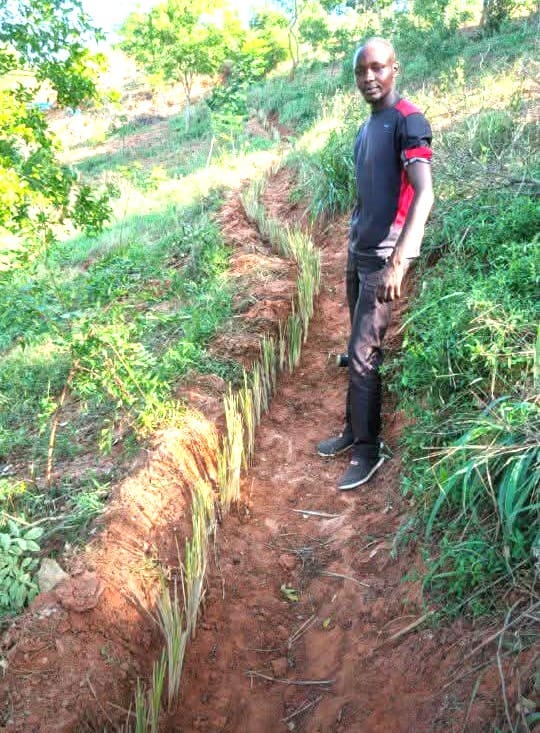
How to plant
Lay out the contour, prepare the trench and plant slips close together so the hedge closes fast.

How to maintain
Fill gaps, protect young hedges from grazing, and cut the hedge regularly; the cuttings make good mulch.
Where vetiver is used


All applications
An overview of every use of the Vetiver System, with disaster risk reduction and climate benefits.
Global Vetiver Farmer Program
For 40 years, farmers have told us that crops grow better beside vetiver hedges. The benefits for soil and water are well proven, but no one has measured, across many countries, how much a hedge or a single vetiver plant changes the yield of the crops beside it, how far the effect reaches, and why it differs from one farm to the next. The Global Vetiver Farmer Program sets out to answer those questions, with the help of the people who know vetiver best: the farmers, gardeners and researchers who grow it.
Taking part is simple. Choose one of eight vetiver farm models, register your site, and once a year at harvest record how your crop grows at the hedge and a few steps away from it, on a phone, a computer or paper, in your own language. The program goes live at the end of October 2026.

Latest from TVNI
Find your way around
The menu at the top of every page has seven sections:
- Vetiver Grass Technology: what VGT is, the plant, and how to propagate, plant and maintain it.
- Guides, Standards and Specifications: the design standards, guides and Special Focus Notes.
- Applications: agriculture, water, slopes, pollution and other uses.
- Global Vetiver Farmer Program: citizen research on vetiver and crop yields.
- Network Services: Document Center, conference papers, webinars, training and contacts.
- Community and Media: network people, stories, the world map, national networks and videos.
- Newsletters and Posts: everything TVNI publishes, newest first.
Our mission
Fresh water underpins every livelihood and every investment. Rain that falls on the land either runs off into streams, rivers and reservoirs (“blue water”) or soaks in to become soil moisture and groundwater (“green water”). Farms, towns and economies depend on both, so water security means managing the two together.
The Vetiver Network International (TVNI) is a global nonprofit that promotes the Vetiver System, a nature-based, low-cost way to do exactly that. A vetiver hedge slows runoff, spreads it and lets it soak in, guiding rainwater to the soil and to the streams at the same time (see Vetiver Hedge Mechanisms). From farms and flood-prone slopes to polluted sites and towns, the same hedges conserve soil and water, recharge groundwater, protect roads, rivers and dams, reduce disaster risk, regenerate degraded land, help control crop pests and diseases, and provide income from handicrafts and biomass.
Founded in 1995, TVNI builds on World Bank-supported work and a scientific foundation in hydrology, soil mechanics and plant ecology. It is an open, volunteer-driven network of practitioners, researchers and community leaders in more than 100 countries, with no central management or paid staff. Its field-tested guides are free to all and support the Sustainable Development Goals for zero hunger (SDG 2), clean water (SDG 6), climate action (SDG 13) and life on land (SDG 15).
Network People History and achievements Timeline presentation Donate

Dedication
This website is dedicated to His Majesty King Bhumibol Adulyadej the Great of Thailand, for his leadership in putting the Vetiver System to work for farmers and the land; to John C. Greenfield of New Zealand, whose pioneering work brought vetiver hedges to the world’s attention; and to Dr. Paul Truong of Australia and Vietnam, whose research laid the scientific foundation for vetiver’s use in engineering and water quality.
It is dedicated also to the many scientists, engineers, farmers and vetiver users around the world whose commitment and work have made this knowledge freely available to all.