Training and Certification
Building the knowledge and skills that quality applications depend on
The quality and success of Vetiver System (VS) applications depend on those responsible having adequate knowledge of some or all aspects of the technology. Training at all levels is important and can be delivered through workshops and classes to meet the needs of participants from rural communities, private companies, and government and non-government agencies.
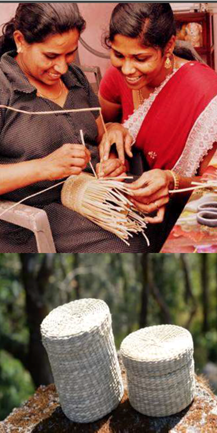
In-field, practical, hands-on training is essential: it helps trainees understand the simplicity and the “feel” of the technology.


Documents found useful for training programs
| Document | Link |
|---|---|
| Manual of the international training course on the Vetiver System, Office of the Royal Development Projects Board, Thailand | |
| Vetiver Training Program, Bangkok, Thailand (handicraft training report, India 2007) | |
| Vetiver Handicraft Training Course held in China | Page |
| Vetiver System Brochure (a simple and effective training tool) | |
| Vetiver Grass – A Hedge Against Erosion (John Greenfield), English | Google Drive |
| The Vetiver System for Soil and Water Conservation |
All the technical guides and manuals listed under Manuals, Guides and Publications make excellent training aids, as do the Guides, Standards and Specifications.
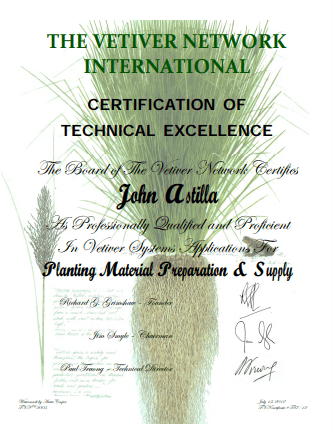
Certification in technical competency and excellence
The success or failure of Vetiver System applications depends on the quality of the application and on the knowledge, experience and competence of the people who design and carry out the work. TVNI set up a system of certification to recognize technical excellence at two levels.
Certificate of Excellence
In recognition of technical excellence in research, development and application of the Vetiver System, TVNI may award individuals, organizations and companies a Certificate of Excellence in one or more areas:
- Soil and moisture conservation (on-farm and/or off-farm, watershed protection, land, gully and waterway protection)
- Environmental management (disturbed land reclamation, carbon sequestration, biofuel, etc.)
- Research
- Nursery, propagation and supply
- Alternative uses (handicrafts, medicinal uses, landscaping, others)
- Community involvement and extension
Professional Certification
Bio-engineering and phytoremediation applications are not in the Part A list, because certification in these two areas requires specialized professional skills and experience in design and application, to assure success and prevent costly failures. Such certification is made under separate guidelines titled “Professional Certification.”