Pollution and Wastewater
Cleaning water and contaminated land with vetiver
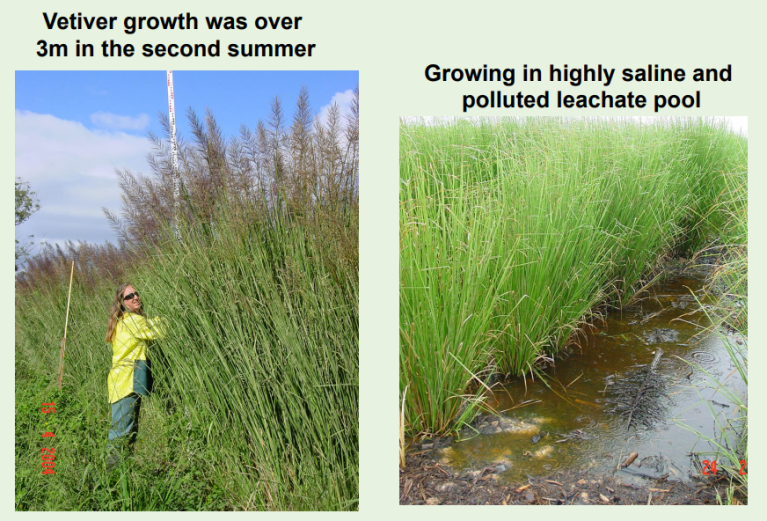
Vetiver tolerates very high levels of nitrate, phosphate and most heavy metals, in soil or in water, where most plants would die. Its massive root system survives both drought and waterlogging. In wet conditions its upright, V-shaped leaves open out and transpire large volumes of water. Together these features make vetiver an ideal plant for phytoremediation: it removes water, takes up nutrients, and holds heavy metals mainly in its roots.
- How vetiver treats water
- Household and village sewage
- Farm and fish-pond effluent
- Industrial effluent
- Landfills
- Mine wastes
- Contaminated land
- Further reading
How vetiver treats water
There are three main ways to use vetiver, and each can be adapted to industry, farms or communities:
- Land application. Effluent is irrigated onto a planted field of vetiver, which uses up the water and turns nitrogen and phosphorus into leaves and roots, up to about 100 tons of dry matter per hectare a year in these irrigated, nutrient-rich systems. Heavy metals stay mainly in the roots. This needs a large area of land.
- Constructed wetlands. A small, contained bed of vetiver treats a continuous flow, for example from household or community septic tanks.
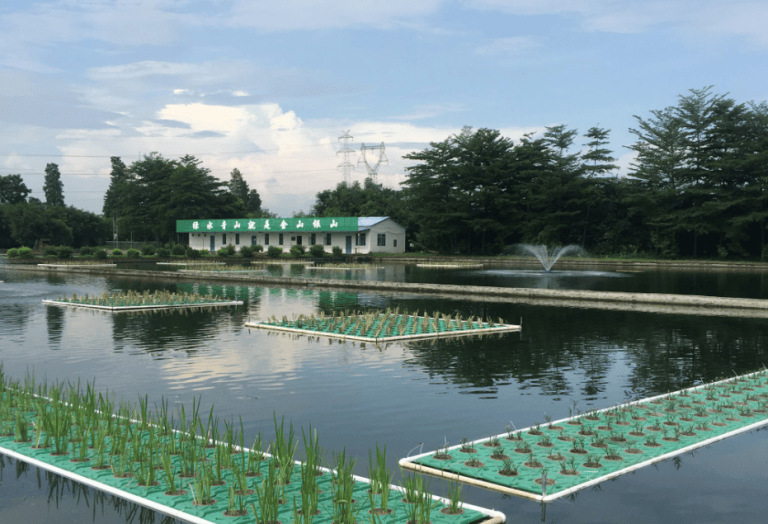
- Floating islands. Vetiver grown on floating rafts (pontoons) on lagoons, ponds and slow drains takes up nutrients from the water.
Large systems are sized with computer models using long-term climate data, soil and groundwater conditions, and the volume and strength of the wastewater. For small systems, Paul and Nicholas Truong developed a simpler model that estimates the land area and number of plants needed.
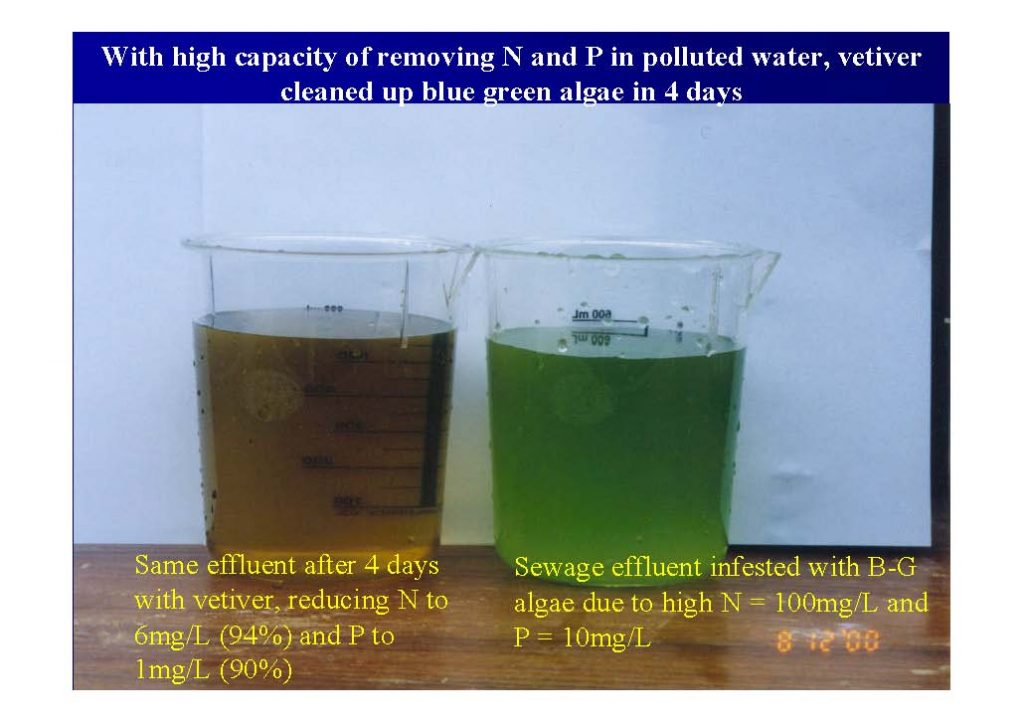
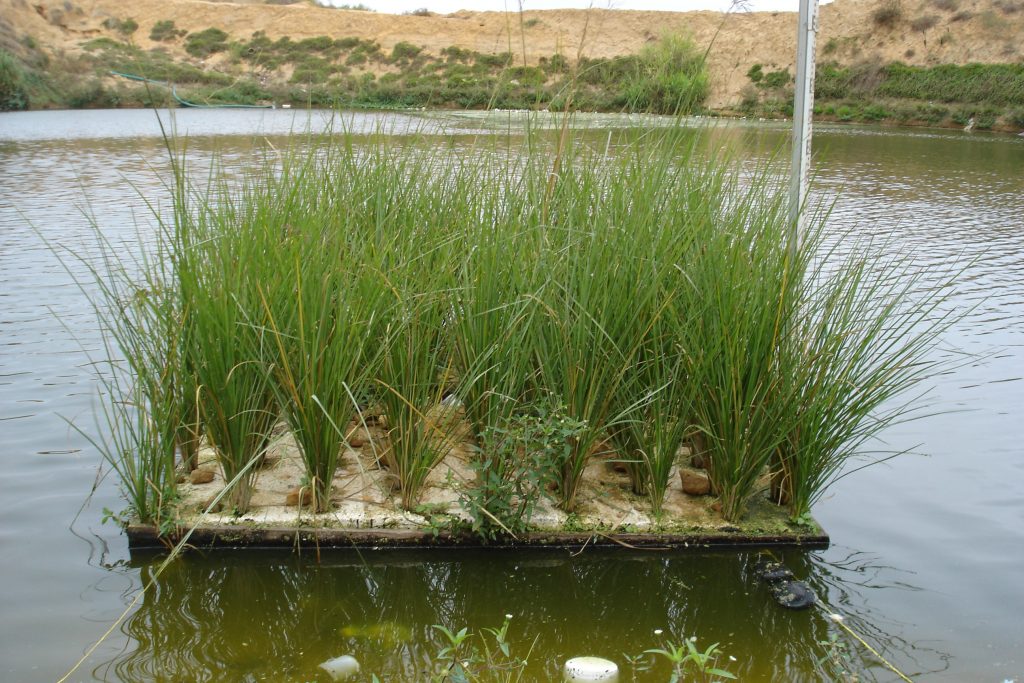
Photo essay (PDF)Design guidance: C4 GUIDE EFFLUENT BEDDesign guidance: C10 GUIDE- FLOATING ISLANDS
Household and village sewage
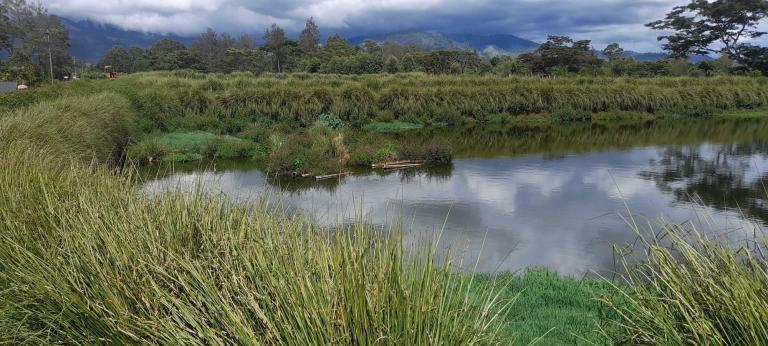
Vetiver can treat sewage at any scale. The simplest system is a hedge around a sewage lagoon, sometimes with a few floating islands: the hedge keeps debris out, reduces seepage, stabilizes the bank and gives habitat to wildlife, as at a university in Papua New Guinea. In Guizhou, China, vetiver is a key part of a complete sewage system serving Caixin village (Feng Ziyuan, Xia Hanping and Xiong Yuan). In Australia, vetiver disposes of treated effluent at Boonah and at the Watts Bridge airfield; success depends on proper construction and management.
At the smallest scale, vetiver planted around pit latrines stabilizes the walls, reduces seepage into the surrounding soil and gives privacy. Where untreated sewage runs in open drains, vetiver planted along them can reduce the nuisance.

Design guidance: C3 GUIDE-TERTIARY-EFFLUENTDesign guidance: C2 GUIDE-VETIVER-LATRINEDesign guidance: C8 GUIDE-RAW-SEWAGE-DRAINS
Farm and fish-pond effluent
Vetiver hedges planted for soil conservation also trap farm chemicals carried in runoff, as shown with herbicides from cotton fields in Queensland, Australia. This helps organic farmers keep their land free of chemicals. On livestock farms, vetiver treats effluent from piggeries, dairies and feedlots, usually by irrigating it onto vetiver beds, or with floating islands on effluent lagoons. In China, Feng Ziyuan has worked with more than 1,000 piggeries on this practice.
Vetiver also protects fish-pond banks and helps clean pond water, and it has treated effluent from a seafood factory in the Mekong Delta (Can Tho University), from coffee wet processing in Jimma, Ethiopia, and from flower farms and oil palm mills.

Design guidance: C1 GUIDE-PLANTATION-EFFLUENTDesign guidance: C9 GUIDE- FLOWER-EFFLUENTDesign guidance: D11 GUIDE_VFI-FISH
Industrial effluent
In Australia, effluent from a rendering plant, very high in nutrients and salt, was stored in two ponds. It was used to irrigate vetiver planted on the pond banks and was also treated in place with floating vetiver. In Trinidad, a constructed vetiver wetland treats storm runoff from a large shopping mall and its parking lot (Jonathan Barcant). In Kolkata, India, floating vetiver cleans the water around a floating restaurant (Pradeep Kumar).
Constructed wetlands can also serve smaller users: single households, small hospitals, hotels, schools and refugee camps.

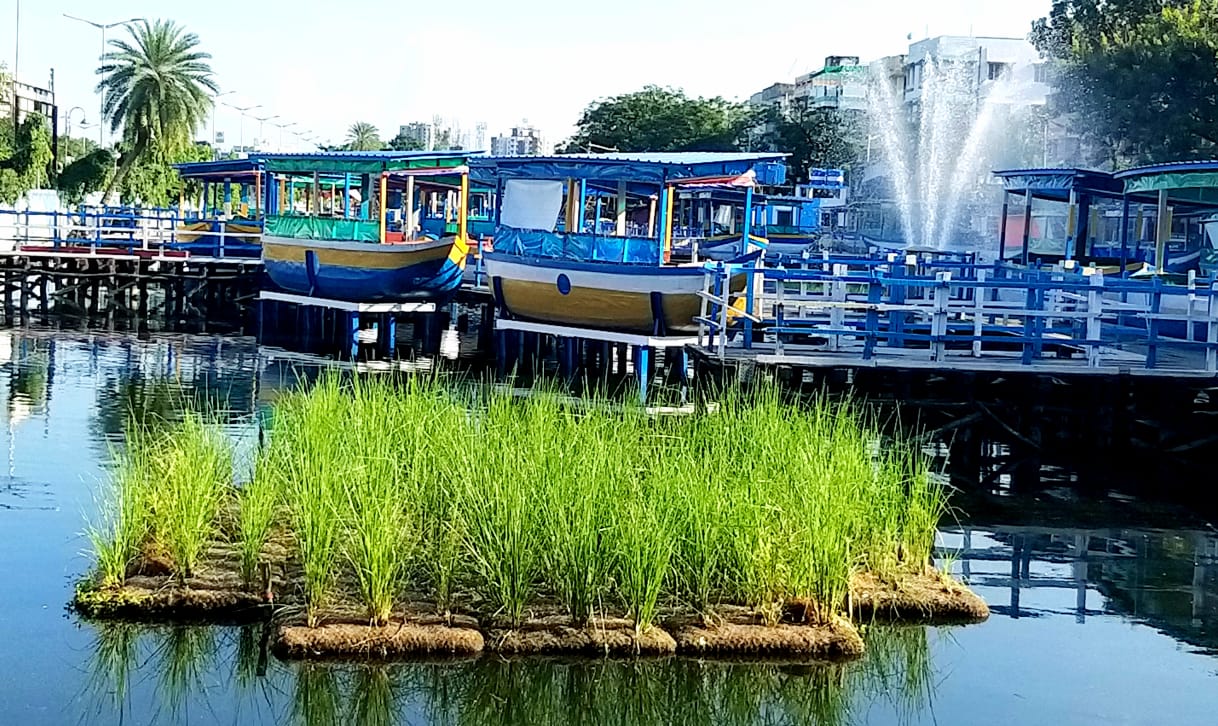
Photo essay: floating islands (PDF)Design guidance: C3 GUIDE-TERTIARY-EFFLUENTDesign guidance: C10 GUIDE- FLOATING ISLANDS
Landfills
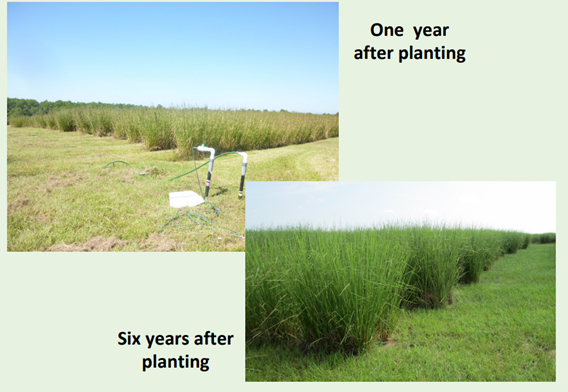
Managing leachate, the contaminated water that forms when rain soaks through waste, is one of the most costly jobs at any landfill. Hauling it to a treatment plant or evaporating it is expensive and adds to the site’s carbon footprint. Leachate Management Specialists, working with Paul Truong, installed the first vetiver leachate disposal system in the United States in 2011, at a closed landfill in Mississippi. It is still operating, and according to the company it has saved more than a million dollars in hauling and disposal costs.
The leachate is pretreated and then irrigated over a field of vetiver on top of the landfill. The vetiver uses the water and the nutrients in it, and its cover also reduces the amount of rain that soaks into the landfill, so less leachate is formed. Vetiver also stabilizes landfill slopes and covers.
Mine wastes
Mining for metals is expanding worldwide, and with it the need to rehabilitate waste rock dumps and tailings. Vetiver offers three advantages. It contains the site, by controlling erosion and sediment from dumps and infrastructure. It cleans up, by keeping contaminants from spreading into the surrounding environment. And it is natural, with no secondary by-products.
Vetiver has rehabilitated open-cut bauxite mining at Los Pijiguaos, Venezuela, on acid soils under 2,400–2,900 mm of rain a year. In the Philippines, BioSolutions, the company Mary Noah Manarang founded over 15 years ago, completed a high-quality nickel mine rehabilitation in the south of the country.

Photo essay: mine wastes and tailingsPhoto essay: mine projects in Africa
Contaminated land
Beyond mining, vetiver can clean up land contaminated by industrial spills and storage. In Central Queensland, Australia, an industrial waste dump with ammonia levels up to 1,220 mg/kg and total soil nitrogen up to 5,380 mg/kg was rehabilitated with vetiver within two years (Paul Truong).
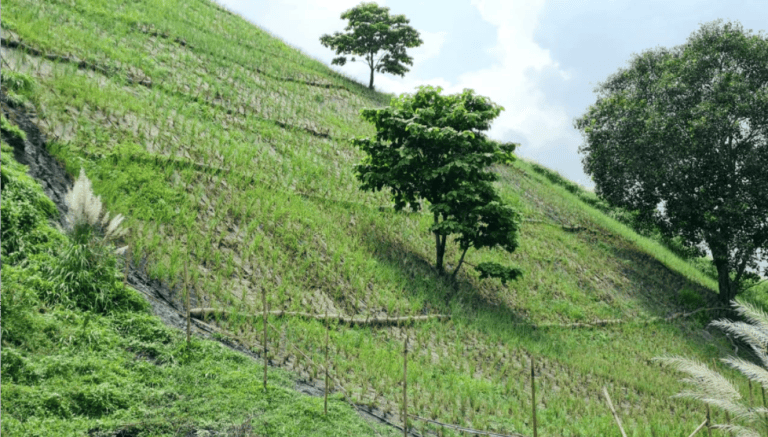
Where coal is burned for power, heaps of fly ash are both a health hazard and highly erodible. In India, vetiver planted through coconut matting has stabilized fly ash dumps (Pradeep Kumar). In Vietnam, research reports that vetiver grows on soils still contaminated with dioxin from the war-era herbicide Agent Orange.

Further reading
Photo essays, papers and reports on vetiver for wastewater, landfills, mines and contaminated land. Type in the search box to filter by topic, country or author. More papers are in the Document Center and the Conference Papers.