Comprehensive Assessment of Staple Grains, High-Value Perennials, and Vegetable Crops Under Rising Soil Temperatures—and the Vetiver Solution
The Crisis Beneath Our Feet
While the world fixates on rising air temperatures, bare degraded soil now reaches 43-50°C during peak sun versus 19-24°C in vetiver-protected systems. Satellite thermal analysis of India’s Vanya Farm (India) proves the mechanism: the same land measured 50°C in 2000 (bare degraded baseline), then cooled to 40-42°C after transformation into food forest—a 9°C absolute decline from vegetation alone while surroundings remained at 50°C. This isn’t marginal—it’s the difference between functional agriculture and physiological collapse.
Critical Crops Under Thermal Siege
Global Staple Grains: Maize, wheat, rice, and sorghum face catastrophic yield losses as rising soil temperatures exceed physiological tolerance ranges for root function. Maize yields drop 15-24% with just +2°C soil warming; the US Corn Belt faces 40% decline by late century as heat stress overtakes water stress as the primary limiting factor. Wheat suffers 6-8% loss per 1°C rise (accelerating above 2.38°C threshold), with terminal heat stress now the leading cause of crop failure globally. Rice, feeding half the world’s population, experiences 50% yield reduction during grain filling when soil temperatures reach 37°C, while sorghum’s C4 drought-resilience advantage cannot overcome heat-induced pollen sterility at flowering. Warmer soils simultaneously accelerate pest cycles and break down crop genetic resistance above 27-28°C, creating multiplicative damage. For smallholder farms in Africa and Asia, vetiver systems could deliver the only scalable solution for maize and sorghum: 6-10°C soil temperature reduction through living hedgerows and mulch, 50-80% moisture retention buffering thermal stress, and 40-90% nematode suppression—recreating the soil thermal environment these crops evolved in, even as ambient climate exceeds historical bounds.
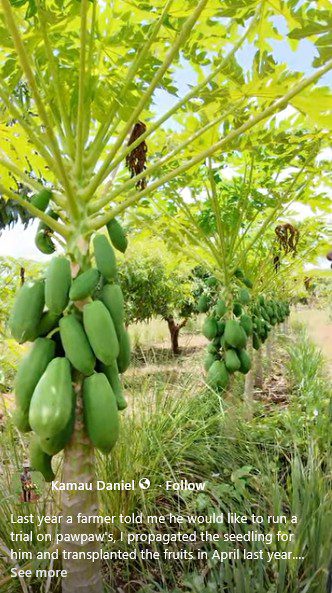
High-Value Perennial Crops: Coffee, grapes, banana, guava, cashew, and tropical fruits face cascading failures as soil temperatures exceed narrow thermal windows. Coffee’s root zones need 26-28°C but bare degraded soils now reach 42°C, causing chronic dysfunction even with adequate rainfall—Robusta loses 14% yield per 1°C above its newly-discovered 20.5°C optimum. Grapes experience a deadly spiral where genetic nematode resistance breaks down above 27°C, thermal stress weakens vascular systems, and accelerated nematode reproduction compounds damage until vines fail. Shallow-rooted crops suffer most acutely: guava’s 12-18 inch roots sit in the hottest soil zone where 43°C temperatures cause cellular respiration breakdown, while guava root-knot nematode (M. enterolobii)—overcoming all known resistance genes—already collapsed Brazil’s entire industry ($61M losses, thousands of jobs) and now spreads globally. Banana, the 5th most important food crop, suffers 20% worldwide losses from a nematode complex causing toppling disease (burrowing nematode destroys anchor roots, 30-60% losses) with zero commercial resistance available—90% subsistence farming means food security crisis for tropical poor. Black pepper and dragon fruit, despite tropical origins, cannot tolerate 35-45°C extremes now common on cleared land. Cashew exemplifies an unsolvable paradox: requires full sun (no shade tolerance), cannot move to cooler elevations, needs daily irrigation during heat waves yet dies from waterlogging, and grows primarily in sandy coastal soils optimal for nematode survival.
Vegetables: Face compound siege—root-knot nematodes complete 2-3 additional generations per season in warmer soils, become more virulent even as reproduction slows, and genetically resistant varieties fail above 27-28°C as defense genes lose function precisely when pest pressure peaks. Vetiver systems deliver 6-10°C soil cooling, 40-90% nematode suppression through biochemical root exudates that work when genetic resistance fails, and 50-80% moisture improvement—reversing the death spiral forcing farmers to abandon coffee plantations, guava orchards, banana farms, and vegetable operations across the tropics.
The Nematode-Temperature Crisis and Vetiver Solution
Rising soil temperatures create a death spiral for global agriculture through root-knot nematodes. These microscopic pests complete their life cycle in just 20 days at 25-27°C, but warmer soils accelerate reproduction by 2-3 additional generations per season, expand their range poleward at 20-30 km per decade, and make them more virulent—causing greater crop damage even as reproduction rates plateau. Most devastatingly, virtually all genetic resistance genes become unstable above 27-28°C; tomato’s Mi gene allows only 2% nematode development at 28°C but 87% at 33°C, while plant defense proteins lose function precisely when pest pressure peaks. Vetiver’s protection is multiplicative because nematicidal root exudates work independently of temperature, 6-10°C soil cooling keeps temperatures below genetic resistance breakdown threshold, and 50-80% moisture improvement maintains plant resilience while 83-130 tons of organic matter per hectare supports beneficial microorganisms that prey on nematodes.
Economic Reality and Urgent Timeline
Conventional approaches have failed: nematicides cost $770-1,540/ha annually with declining effectiveness, relocating perennial crops means total loss of 3-20 years establishment investment, and yield losses of 20-80% are already occurring. Vetiver systems cost $65-1,000/ha depending on intensity, last 15-20+ years, deliver 25-150% yield improvements, and pay for themselves in 6-18 months. For high-value crops like coffee, grapes, guava, or banana earning $5,000-10,000/ha, even the most expensive VCR system ($620-1,000) pays back first season. Brazil’s guava industry—which collapsed entirely from M. enterolobii nematode ($61M losses, thousands of jobs lost)—demonstrates the cost of inaction as this same nematode spreads across Africa, Asia, and the Mediterranean with zero genetic resistance available. The window for intervention is closing: vetiver requires 2-3 years to deliver full benefits, soil degradation accelerates under heat stress creating negative feedback, nematode reservoirs build in warmer soils, and crop failures cascade through communities causing land abandonment and knowledge loss. The solution exists—6-10°C soil temperature reduction through living hedgerows (validated by Vanya Farm satellite data showing 7-8°C cooling from perennial vegetation), 40-90% nematode suppression via biochemical compounds, 50-80% moisture improvement, and permanent soil transformation—recreating the thermal and biological environment crops evolved in at costs accessible to smallholders worldwide. Vetiver doesn’t fight symptoms; it reverses the thermodynamic conditions causing failure.
Analysis based on vetiver project documentation and published research. Every temperature threshold, yield impact, and protective mechanism derives from documented sources. Where crop-specific vetiver interactions unavailable, extrapolates from documented mechanisms (temperature reduction, moisture retention, nematode suppression) applied to established crop thermal requirements.