How Vetiver Retrofits Turn 7% Yield Losses Into 200%+ Gains—While Suppressing Pests Farmers Never Expected
(the photos in this article are all from Ethiopia and show vetiver planted in the mid 1990s and the early 2000s)
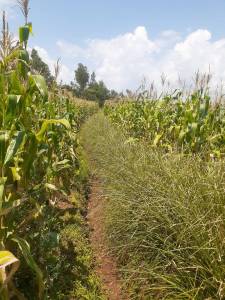 The transformation of Ethiopia’s degraded agricultural landscapes through vetiver grass integration represents one of Africa’s most compelling success stories in soil conservation. With more than 60% of the Amhara Regional State threatened by soil erosion and land degradation, Ethiopia has invested massively in structural soil conservation measures including soil bunds, fanya juu terraces, stone bunds, and bench terraces. Between 2010-2015 alone, more than 15 million people contributed unpaid labor equivalent to $750 million annually, rehabilitating over 12 million hectares through physical and biological conservation measures across 3000+ watersheds. However, decades of field research revealed a critical weakness: unstabilized physical structures alone often fail to deliver promised benefits, with studies showing that soil bunds without biological stabilization actually reduce crop yields by 7% due to lost cultivable area without compensating gains. This recognition catalyzed a fundamental shift toward integrated bio-physical approaches, with vetiver grass emerging as the cornerstone biological solution. The most compelling validation comes from retrofitting existing terraces: old constructed terraces fitted with vetiver hedgerows located on the edge of risers greatly improve terrace efficiency for both soil and water conservation, transforming under-performing infrastructure into highly effective systems at less than one-third the cost of engineered structures.
Large-scale watershed implementations demonstrate vetiver’s transformative impact when integrated with existing terrace systems, though the full scope of benefits often exceeds what farmers initially anticipated. The Somodo Watershed study in South-Western Ethiopia documented results from treating 190 hectares (20% of the watershed) with vetiver-stabilized soil bunds between 2011-2018. Within just two years, vetiver hedges fully established and accumulated an average of 36 centimeters of soil above hedgerows, effectively creating raised terraces while reducing field slopes by 2.5%. This soil accumulation corresponded to preventing losses of 20.88 tons per hectare per year that would have occurred without vetiver barriers. The established bunds with vetiver significantly improved soil moisture content, reduced bulk density, and increased soil organic carbon compared to areas without conservation measures. Two-year-old vetiver hedgerows substantially improved available phosphorus and reduced exchangeable acidity in the soil zones above hedges. Complementary research at Anno Farms—a 200-hectare commercial operation in Oromia region where vetiver had been used for over 15 years—provided the gold standard for long-term outcomes. Comparing soils with and without vetiver across six replicate sites, researchers documented soil organic matter increases from 2.7% to 4.3% (+59%), available phosphorus doubling (+100%), available potassium rising 54%, total nitrogen increasing 33%, and critically, microbial biomass increases of 200-500%—the invisible underground transformation that drives all other benefits. These microbial increases include Arbuscular Mycorrhizal Fungi (AMF) that extend 10-15 meters from vetiver hedges, connecting with crop roots and creating field-wide nutrient and water distribution networks that effectively expand crop rooting zones by 10-100 times, resulting in 30-50% reductions in fertilizer requirements while actually improving yields.

The hidden biological benefits repeatedly surprise farmers who initially adopted vetiver solely for erosion control. As one of the Ethiopians involved with the initial program in Mettu, Oromia (that was incidentally partly funded by TVNI in the 1990s) testified: “Truly speaking, we have not noticed this (stem borer control). We appreciated the development of the hedges and their impact on water and soil conservation. The maize stand overall was amazing, and the leaves were deep green. At times, most of the (other) maize fields were infested by stemborers. However, maize planted in between vetiver hedges were free of this pest.” This observation aligns with validated research by van den Berg (2006) documenting that 96.3% of stem borer eggs are laid on vetiver with 0% larval survival—vetiver acts as a dead-end trap crop—while Khan et al. (2010) measured 40-70% stem borer damage reduction in crops adjacent to vetiver hedges. Similarly, Jindapunnapat et al. (2018, 2019) documented nematode-toxic biochemical compounds in vetiver root exudates achieving 30-90% population reductions of Root Knot nematodes depending on hedge spacing, with the specific sesquiterpene acids identified through gas chromatography-mass spectrometry analysis showing 40-70% mortality against root-knot nematodes in laboratory assays. Fields with soil bunds stabilized with vetiver grass achieved the highest bund heights and lowest inter-terrace slopes compared to all other conservation measures tested, but the deeper transformation occurred underground where vetiver’s massive root systems—diving 3-5 meters deep—created permanent water infiltration channels that persisted 3-5 years even after vetiver removal, while simultaneously hosting mycorrhizal networks that fundamentally restored degraded soil’s biological function. The deep green maize leaves farmers observed between vetiver hedges reflected not just saved soil and water, but an entire restored soil ecosystem delivering nutrients, suppressing pests, and maintaining plant health through biological pathways that chemical agriculture could never replicate.
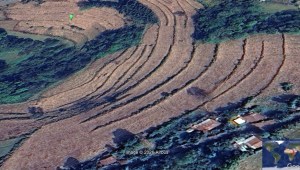 Comparative studies across multiple regions reveal consistent patterns in both measured outcomes and farmer discovery of unexpected benefits. The Gimbo District participatory evaluation compared five grass species—vetiver, elephant grass, desho grass, rhodes grass, and guinea grass—as soil bund stabilizers on 25-30% slopes. Farmers consistently ranked any grass-stabilized bund far superior to bare soil bunds, with the critical finding that unstabilized structures waste land without delivering benefits. Vetiver took 25-30 daysto establish versus 10-15 days for desho grass, leading farmers to prefer faster-establishing species for immediate fodder production, though vetiver’s deep rooting and persistence made it superior for long-term structural stability and its unique biochemical properties delivered pest control benefits the other grasses could not match. The Fanya juu systems research in Banja Shikudad District demonstrated that integrated physical-biological measures delivered dramatically better outcomes over time: crop yields increased 8.1% after just 2 years, reaching 204% improvements after 25 years on p
 roperly maintained fanya juu terraces, while soil bunds with biological stabilization increased yields 46.7-87.7% depending on age. These yield increases reflected the compound benefits of reduced erosion, improved moisture retention, accumulated soil fertility, and increasingly over time, the establishment of field-wide mycorrhizal networks and natural pest suppression systems that farmers initially never anticipated when they planted vetiver simply to hold soil in place. Studies in Lasta District confirmed that vetiver and other grasses on bunds increased soil moisture content by 12-22% and improved bulk density compared to unstabilized controls. The research consensus is unambiguous: Ethiopia’s massive investment in physical soil conservation infrastructure—millions of kilometers of terraces and bunds constructed through decades of community labor—delivers optimal returns only when retrofitted with biological stabilization, particularly vetiver grass, which transforms underperforming structures into integrated agroecological systems that reduce erosion by up to 90%, cut runoff by 70%, systematically build soil fertility through accumulated sediment and organic matter, suppress crop pests through biochemical exudates and beneficial insect habitat, establish field-wide mycorrhizal networks that slash fertilizer requirements while boosting yields, and ultimately convert degraded landscapes into resilient, biologically-rich productive agricultural systems capable of sustaining millions of farming families through climate variability that would devastate farms without these underground biological partnerships.
This is the study that says it all (the gold standard) – The Anno Farms Ethiopia Vetiver Study
Study Details:
The research was conducted at Anno Agro-Industry where vetiver grass had been used for soil conservation purposes for more than one and a half decade (over 15 years). This was a 200-hectare commercial farming operation in the Oromia region of Ethiopia. ResearchGate
Key Findings from the Study:
The researchers collected soil samples from areas with and without vetiver grass in six replicates and measured important soil parameters including bulk density, moisture content, CEC, soil organic matter, total nitrogen, available phosphorous and available potassium.
The study documented significant improvements in soil quality with vetiver grass:
- Soil Organic Matter: Increased from 2.7% to 4.3% (+59%)
- Available Phosphorus: Doubled (+100%)
- Available Potassium: Increased 54%
- Total Nitrogen: Increased 33%
- Soil Moisture Content: Significantly improved
- Bulk Density: Reduced (indicating better soil structure)
Study Location & Context:
Anno Agro-Industry Farm is located in Gobu Sayo District in the Oromia region of Ethiopia. The study examined the long-term effects of vetiver hedgerows on maintaining soil fertility through nutrient trapping and erosion control.
Academic Access:
The study was published in the Journal of Science and Sustainable Development in 2013 and has been widely cited in subsequent research on soil conservation in Ethiopia.
This is such Exciting work especially to a new farmer like myself.
Just when I fell comfortable with the knowledge I have gained and share it with others, I come undone and realise I just haven’t fully comprehended this wonder called vetiver and it’s natural inbuilt mechanisms we need.
This is such Exciting work especially to a new farmer like myself.
Just when I fell comfortable with the knowledge I have gained and share it with others, I come undone and realise I just haven’t fully comprehended this wonder called vetiver and it’s natural inbuilt mechanisms we need.
Has anyone started doing some work with or on dieback (Phytophthora cinnamomi) in australia?
I wonder if we know the reason behind why vetiver grass technolgy didnot progress as much as we like dispite its good results ????
Muy contento por saber mas. Soy un fanático del vetiver y lo práctico. Pronto comunicare mis resultados en mi comunidad Valle Nuevo, Monteagudo, Chuquisaca _ Bolivia