When Farmers Discover What Science Had Already Proven
The Vietnamese Discovery
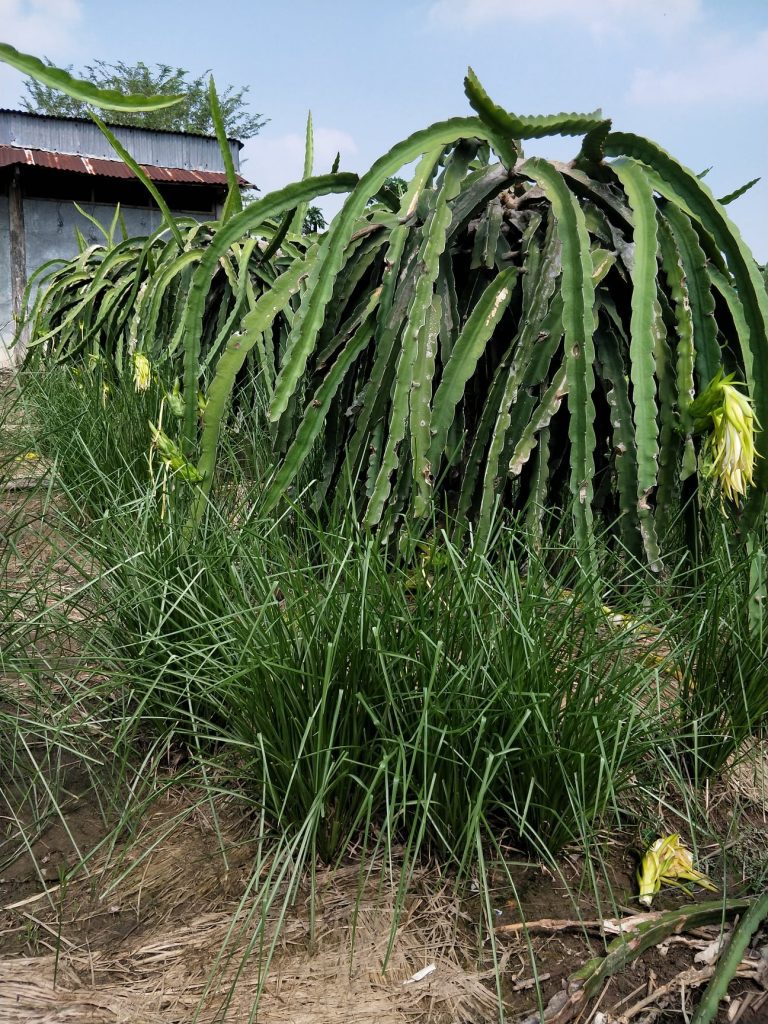
The Vietnam Vetiver Farmers Group (facebook.com/groups/vetiver4vn) has become the world’s most innovative vetiver community through careful field observation and documentation. Their farmers noticed something remarkable: crops planted close to vetiver hedges—particularly papaya, dragon fruit, and grapes—grew with exceptional vigor and health. The farmers attributed this dramatic improvement to vetiver ‘wicking up’ deep moisture and making it available to nearby plants.
While their moisture theory was incorrect, their observation were absolutely right—something profound was happening. The connection they hadn’t made was that papaya, dragon fruit, and grapes are all highly susceptible to nematode damage. Unknown to the Vietnamese farmers, research conducted decades earlier had already documented vetiver’s powerful nematode-suppressing properties and other hidden benefits. The probability that these hidden mechanisms explained what the farmers were seeing is extremely high. This story illustrates both the power of careful farmer observation and the critical importance of making existing research accessible to practitioners in the field.
1. Dramatic Reduction in Nematode Populations
Research conducted years before the Vietnamese observations showed that vetiver reduces nematode populations by up to 1,000-fold within a two-to-three-meter radius. This protective zone is particularly valuable for crops highly susceptible to root-knot nematodes: dragon fruit, papaya, passion fruit, grapes, black pepper, tomatoes, chilies, yams, sweet potatoes, and turmeric. The mechanism involves biochemical compounds released by vetiver roots that repel or inhibit nematode reproduction. When Vietnamese farmers saw their papaya and dragon fruit thriving near vetiver, they were witnessing this nematode suppression in action—they just didn’t know it yet.
2. Natural Trap Crop for Stemborers
Research from China and South Africa documented that vetiver functions as a ‘dead-end’ trap crop for rice and maize stemborers. The plant’s volatile compounds attract stemborer moths to lay eggs preferentially on vetiver leaves. When larvae hatch and begin feeding, specific chemicals in vetiver tissue destroy their digestive enzymes, preventing successful development. This breaks the pest’s reproductive cycle without any chemical intervention.
3. Habitat for Beneficial Parasitoid Wasps
Vetiver hedgerows provide critical habitat for parasitoid wasps—tiny beneficial insects that lay their eggs inside pest eggs or larvae. These wasps naturally control stemborers, Coffee Berry Borers (affecting coffee), and False Codling Moths (attacking avocados and citrus). Mature hedges offer the structural complexity, microclimate stability, and nectar sources these beneficial insects require. The key insight: maintain at least one uncut hedgerow per field to preserve year-round habitat and ensure continuous biological pest control.
4. Extensive Mycorrhizal Fungal Networks
Vetiver roots host exceptionally dense networks of arbuscular mycorrhizal fungi (AMF). These beneficial fungi extend up to 15 meters from each vetiver plant, forming underground connections with nearby crops. Through these fungal networks, plants share water, nutrients (particularly phosphorus and micro-nutrients), and even chemical defense signals. Essentially, vetiver creates an underground resource-sharing cooperative. Farmers can enhance this effect by dipping vetiver slips in homemade microbial innoculant before planting.
5. Enhanced Water Infiltration and Deep Moisture Conservation
Vetiver’s massive, deep root system creates extensive macropore networks that dramatically improve water infiltration. These biological channels allow rainwater to penetrate deeply into the soil profile rather than running off the surface. The deep roots access moisture stored well below the reach of most crops, and this moisture spreads laterally through the soil. Additionally, vetiver hedges trap fine soil particles, creating localized perched water tables that maintain soil moisture during dry periods. This combination—improved infiltration, deep moisture storage, and lateral moisture distribution—creates a water conservation system that extends several meters from each hedge. This was likely what Vietnamese farmers observed as improved crop performance, though the mechanism involves much more than simple ‘wicking.’
Voices from the Field: Ethiopia’s Experience
An Ethiopian practitioner involved in Africa’s largest smallholding contiguous vetiver program in the 1990s recently reflected on what they observed but didn’t fully understand at the time:
“Truly speaking, we have not noticed this. We appreciated the development of the hedges and its impact on water and soil conservation. The maize stand overall was amazing, and the leaves were deep green. At times, most of the (other) maize fields were infested by stemborers. However, maize planted in between vetiver hedges were free of this pest.”
Like the Vietnamese farmers, the Ethiopians saw clear benefits—spectacular maize growth and freedom from stemborer damage—but attributed it entirely to water and soil conservation. They didn’t realize they were witnessing the stemborer trap crop mechanism and possibly nematode suppression as well. The hidden benefits were there all along, quietly working beneath the surface.
Connecting Farmers and Science: The Path Forward
These stories reveal a critical gap in agricultural knowledge transfer. Valuable research sits in journals while farmers independently rediscover the same phenomena in their fields, often attributing results to incorrect mechanisms. When farmer-science collaboration works well, it can be transformative—farmers provide real-world observations and context, while scientists offer mechanistic explanations and optimization strategies. Both perspectives are essential.
For farmers worldwide: view vetiver not merely as erosion control but as multi-functional agricultural infrastructure activating at least five hidden biological services—nematode suppression, pest trapping, beneficial insect habitat, mycorrhizal networks, and deep water management. Strategic placement around nematode-susceptible crops, along field margins, and within 15 meters of crops needing enhanced nutrition and water maximizes these synergistic benefits. And keep documenting what you observe—your field discoveries matter, even when you don’t yet know the full explanation.
Amazing how benefits vetiver Grass provide to our soil…
Thank you very much for your humble information and knowledge sharing…